 RapidRAW
10,000 Stars: How an Empty Folder Became a Global Community
Reflecting on over 610,000 downloads, YouTube reviews, learning GPU shaders, and how a solo project became a global community.
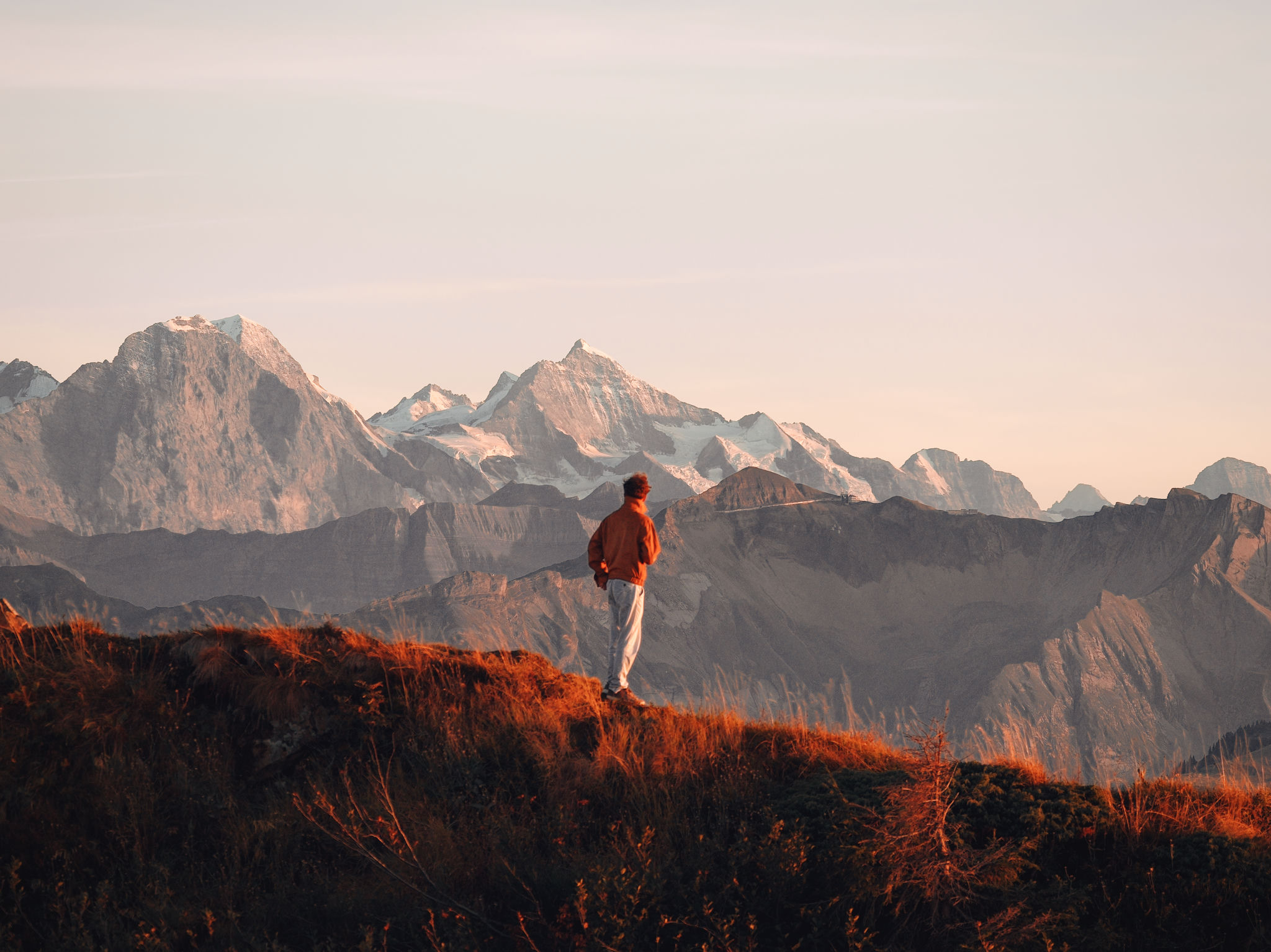
Modern commercial photo editors are built by massive teams of engineers, backed by decades of development, and often require gigabytes of background services just to run.
A little over a year ago, I had none of that. I had an empty folder on my laptop, an apprenticeship in Switzerland, and a frustration with how heavy and sluggish photo editing had become.
I just wanted an editor that was simple, lightweight, and fast. At the time, my knowledge of advanced color science was zero. I barely knew React, and I had never touched a GPU shader in my life. But I set a ridiculous personal challenge: start from scratch, build a working application, and do not stop until moving a slider feels instant.
This week, that empty folder, now known as RapidRAW, crossed 10,000 stars on GitHub and passed 610,000 downloads from GitHub releases alone, not counting Flathub, the AUR, or other package managers.
Seeing these numbers is hard to wrap my head around. I want to share how a solo developer got here, what the journey taught me, and how we keep this project alive and free for the future.
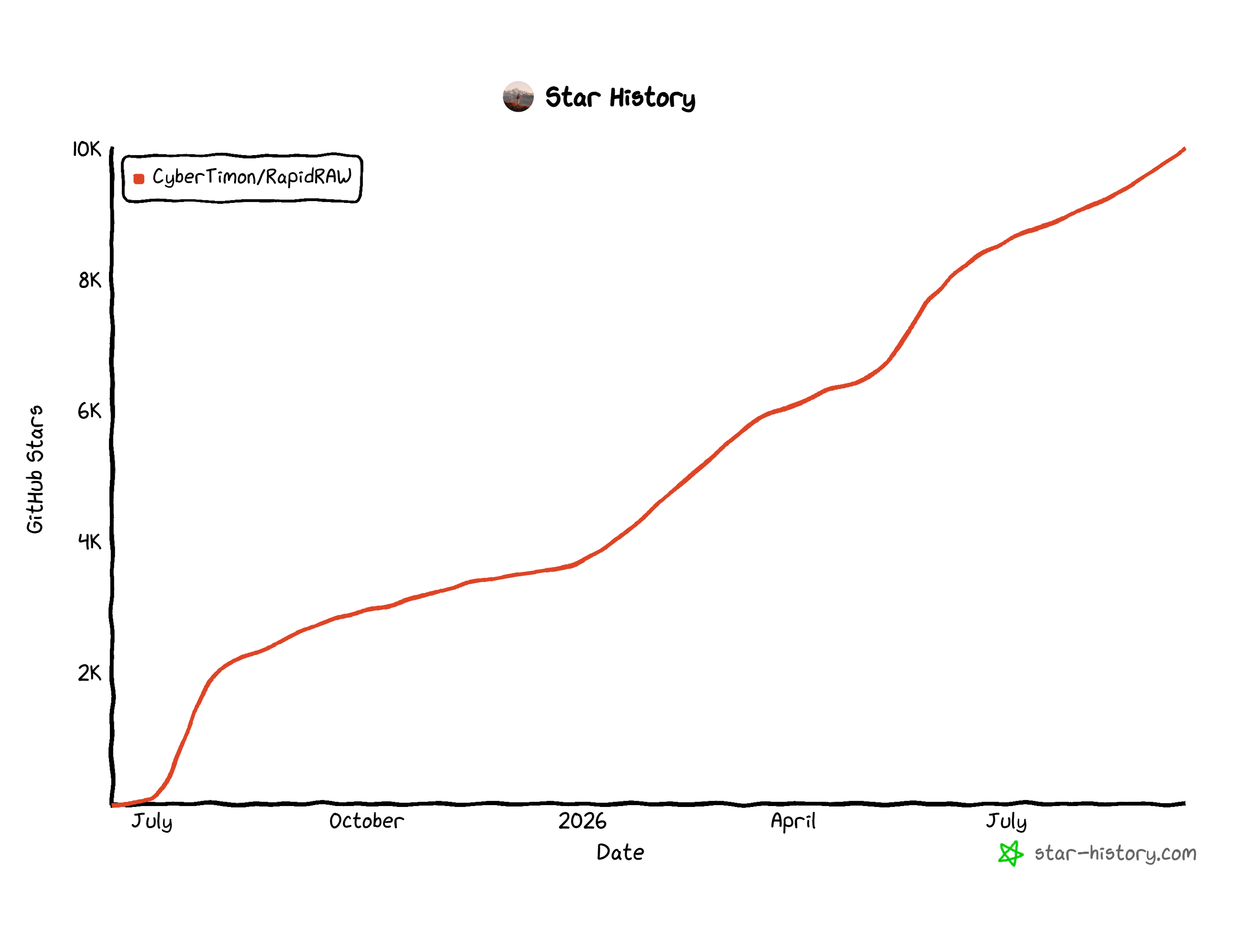
The Overnight Explosion
When I posted the first prototype on Reddit's r/photography in late June 2025, explaining that an 18-year-old had spent two weeks hacking together an editor because Lightroom felt too bloated, I just hoped to get some honest feedback from a handful of photographers.
Instead, the thread took off. Over 300 comments poured in with real-time testing, UI ideas, and bug reports. Photographers patiently pointed out that my blacks and whites sliders were completely inverted, asked for Canon CR3 support, and helped me sort out Mac build permissions right there in the comments.
That initial momentum did not stop there. RapidRAW soon caught fire on Hacker News, climbing all the way to the #1 spot. Suddenly, thousands of people a day were downloading the release builds directly from GitHub.
And then, the YouTube community found it.
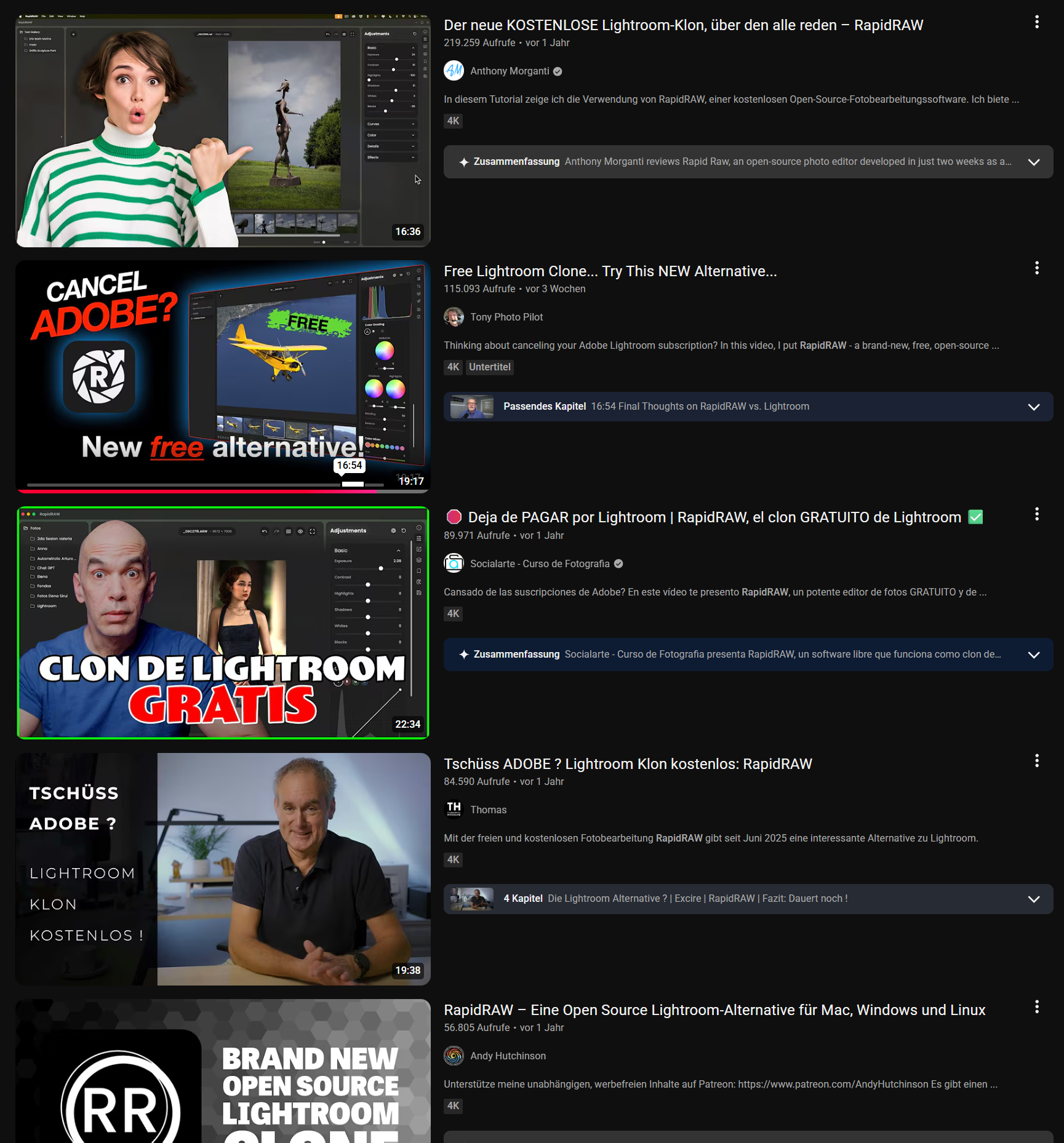
Seeing creators I have watched for years testing my software was surreal. Anthony Morganti put one of the earliest, roughest builds through its paces and gave critical feedback on what needed fixing. Andy Hutchinson tested the core RAW processing engine. Soon, creators from across the globe, like Tony Photo Pilot, Tech Enthusiast, and Momo PTFL, were making videos. Riko Best even used the editor to process his Milky Way astrophotography shots.
All of this growth happened purely by word of mouth. It turns out, photographers were desperately ready for a clean, fast alternative.
RapidRAW by the Numbers
Behind the headline of 10,000 stars and over 610,000 downloads, the repository itself tells the real story of how fast this project evolved:
- 20 MB: The size of the Windows installer, packing a complete RAW engine and custom WGSL shaders into less disk space than a single uncompressed photo.
- 65 Releases: Shipped directly to users over roughly 14 months, moving from chaotic daily builds early on to a reliable release every two weeks.
- 73 Contributors: Developers, designers, and photographers who committed code, translations, and documentation fixes, plus many more who shaped the app through bug reports and feature ideas.
- 548 Forks: People exploring custom builds, tweaking shaders, and experimenting with their own features.
- 4 Operating Systems: Windows, macOS, Linux (Flatpak, deb, rpm, AppImage, and AUR), and an Android build with touch controls.
- 800+ Camera Models: Supported for RAW decoding across nearly every major manufacturer thanks to
dnglab/rawler. - 59% TypeScript, 37% Rust, 3% WGSL: A lean hybrid architecture pairing a responsive desktop interface directly with GPU compute shaders.
Watching the software spread across the globe has been incredible. The entire interface is already available in 13 languages, making the application accessible to photographers worldwide right out of the box.
That global support carried straight into the codebase itself. Contributors regularly stepped up to solve problems I could never have tackled alone on my own schedule.
Building in Public (and Breaking Things)
Reaching 10,000 stars wasn't a smooth, genius-level process. It was a process of making very public mistakes and learning how to fix them quickly.
If you've followed my development log, you know some of the wilder stories from my late-night coding sessions:
- The 6,000-line file: Early on, I stuffed the entire state of the application into a single React file. It got so massive that my code formatter crashed and refused to save. I had to rewrite the frontend using Zustand just to keep my code editor alive.
- Punching a hole in the UI: To make the image render real-time on high-resolution screens, the web browser bridge was too slow. My solution? I literally cut a transparent hole in the UI so Rust and WGPU could draw the pixels directly onto your screen.
- The AgX color disaster: I once asked an AI to help write the math for the AgX tone mapper. The AI hallucinated the matrix numbers, turning a red train logo bright yellow. The community on pixls.us caught the mistake, shared the real formulas, and patiently taught me the science behind tone mapping.
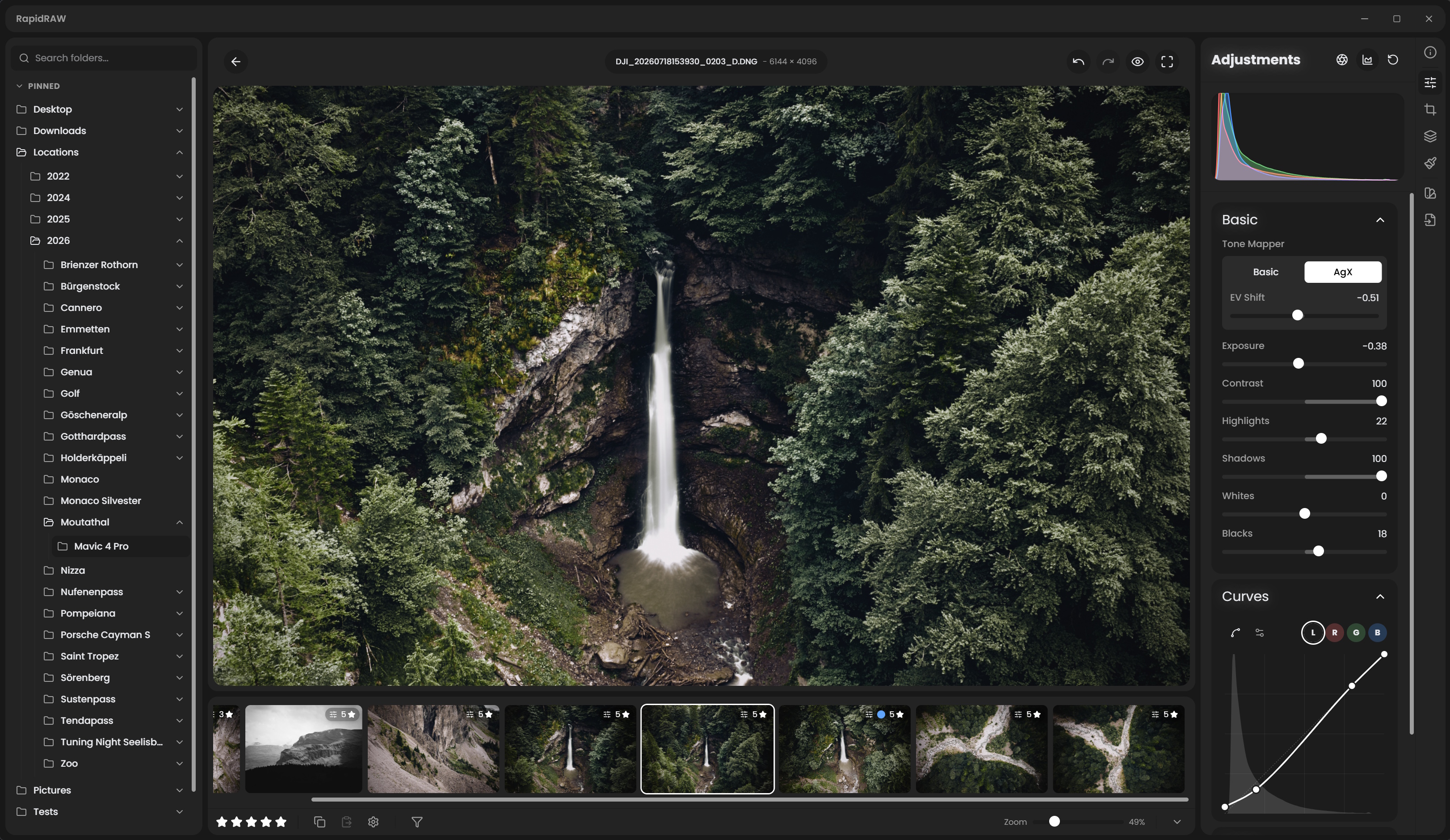
Every mistake was a masterclass. Today, RapidRAW is a complete desktop darkroom with AI masking, advanced curves, and live camera tethering. And despite all of that power, it still stays tiny and fast.
"You Changed My Experience"
The numbers are great, but the messages I receive from users are what keep me coding after I get home from my day job.
I built this because I wanted a better tool for myself, but reading the notes from our Ko-fi supporters showed me that this project actually matters to people. A user named Deak recently left a message that completely made my week:
"You changed my experience of editing raw photos on Linux from a dreadful chore to an enjoyable part of the artistic process. I hope you go to bed every night feeling appreciated and proud of what you have done!"
Another supporter, JamesPTech, wrote:
"Absolutely the highest quality software for photos I have used to date. It's unbeatable, lightweight, and made by someone who understands what a photographer needs. They don't want to take all your money, they want to provide a great product/service unlike corporations."
And Tom, a wedding photographer, said:
"Absolutely blown away by this software. I've been looking for a Lightroom alternative that I like for years. I am a wedding photographer and the fact that you have full editing capability whilst in grid view is an absolute game changer for batch processing."
Messages like these make every late-night coding session worth it.
Keeping the Dream Sustainable
A lot of open-source projects start with high energy and eventually die because the solo developer burns out. I refuse to let that happen to RapidRAW.
Right now, I am balancing this project with my apprenticeship. Between answering issues, reviewing pull requests, and shipping updates every two weeks, RapidRAW is my second full-time job. To keep this going long-term, I've made a few commitments:
- No Paywalls for Local Features: I will never lock local features behind a paywall. The software, the offline AI tools, and the self-hosted ComfyUI integration will remain 100% free and open-source under the AGPL-3.0 license.
- The Optional Cloud Service: For users who don't have a high-end GPU but want advanced generative AI edits without the hassle of setting up Python, I am introducing an optional cloud subscription. You just log in, and it works. This covers server costs and directly funds my time to improve the core editor for everyone.
- Community Sponsorships: The community has been incredibly generous, raising over $10,000 through Ko-fi and crypto. Beyond paying for server hosting, build infrastructure, and hardware, this support helps cover my day-to-day living expenses. That runway gives me the breathing room to allocate significantly more time to RapidRAW without burning out. Every coffee bought directly buys more development hours.
Thank You & Join the Journey
To everyone who reported a bug, translated a phrase, made a YouTube video, or bought me a coffee: thank you. A massive shoutout also goes to foundational open-source projects like rawler and Lensfun, without which RapidRAW simply wouldn't exist. Here's to the first 10,000 stars, and to proving that photo editing can still be fast, lightweight, and free.
Whether you're tired of subscription fees, looking for an editor that won't slow down your machine, or just curious to see what a 20 MB desktop darkroom feels like, I'd love for you to be part of the journey:
- Download the Latest Release: Grab pre-built installers for Windows, macOS, Linux, or Android at getrapidraw.com.
- Star the Repository: Check out the source code, inspect our WGSL shaders, or leave a star on GitHub.
- Join Our Discord: Hang out with fellow photographers, share your edits, report bugs, or talk color science in our Discord Community.
- Support Development: If RapidRAW saves you time or money, consider supporting the project on Ko-fi to directly fund more development hours.
Now, back to the code!
Back to all posts