 RapidRAW
Shipping Every Two Weeks: The RapidRAW Development Cycle
How I manage to build and release complex software updates at lightning speed.
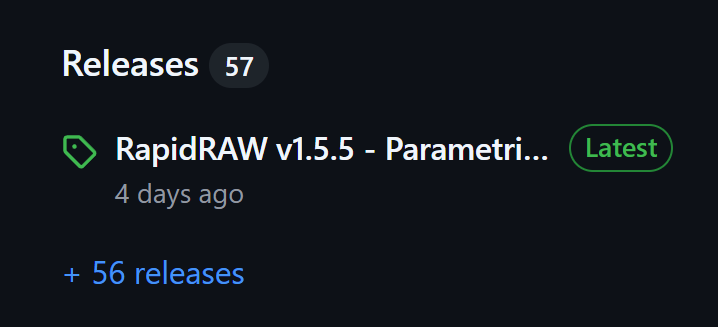
If you look at the release history of RapidRAW, you will notice a distinct pattern. A new update drops roughly every two weeks. Very often they introduce massive new features like AI depth masking, shader algorithms, or a complete UI overhaul.
I frequently get asked how I manage to maintain this pace. Building a GPU accelerated RAW image editor is a complex task, and doing it as a solo developer while working an apprenticeship sounds like a recipe for burnout.
The truth is that modern software development has fundamentally changed. Today I want to share the exact strategies I use to keep the momentum going and ship updates at a speed that would make a traditional corporate team dizzy.
The Solo Developer Advantage
In a large tech company, pushing a new feature to production is a marathon. You have planning meetings, design approvals, sprint grooming, QA testing phases, and strict deployment windows. It can take weeks just to change the behavior of a single button.
As a solo developer, I have zero corporate overhead. I am the product manager, the designer, the developer, and the QA team all rolled into one. If I have an idea for a new feature on a Tuesday morning, I can write the code on Tuesday evening and ship it to users by Wednesday.
My continuous integration and deployment pipeline is incredibly lean. I use automated workflows that compile the Rust and React code for Windows, macOS, and Linux, and then instantly push the binaries to GitHub. I do not have to wait for a committee to approve my pull requests. This absolute freedom allows me to set my own direction and keep my momentum high.
AI as a Mentor, Not a Replacement
I have mentioned using AI before, but I need to be clear about how I actually use it. I do not use autonomous AI agents that write and commit code for me. I write, copy and paste, and debug everything myself.
The reason is simple: I actually want to understand how the code and the underlying concepts work. When I started, I did not know much about WGSL shaders, memory management, or complex matrix math. By working through the problems manually with an LLM acting as a tutor, I forced my brain to learn.
Today, I genuinely understand the low level graphics processing and architectural concepts happening inside RapidRAW. If an AI just built it for me in the background, I would be completely lost the moment a complex bug appeared.
Strict UI Design Guidelines
Moving fast and adding features every two weeks usually leads to one specific problem: a bloated, confusing user interface.
To prevent RapidRAW from turning into a chaotic mess of buttons and sliders, I established strict UI design guidelines very early on. Every new feature must fit within the existing design language. The app needs to look and feel consistent across every single panel.
My highest priority has always been to keep the interface clean and distraction free, while still exposing all the powerful professional tools photographers expect. If a new feature makes the UI feel overloaded, it goes back to the drawing board until I find a more elegant and integrated implementation.
A Ruthless Roadmap and Community Fuel
Moving fast is useless if you are running in the wrong direction. I maintain a very strict, prioritized roadmap so I always know exactly what the next three most important features are. When I sit down to code, I do not waste time wondering what to work on.
But what really drives this roadmap is the community. Seeing people actively use the software, getting their feedback, reading bug reports, and receiving donations is incredibly motivating. It turns what could be an exhausting grind into a highly rewarding hobby.
I usually spend a few hours in the evenings listening to music and writing code. Because I enjoy the process and have the backing of a great community, staying consistent is easy.
We are living in a golden age for independent developers. With lightweight frameworks like Tauri, the raw performance of Rust, and the targeted assistance of AI, a single person can build software that rivals tools made by massive corporations. If you have an ambitious idea, there has never been a better time to start building.
Back to all posts